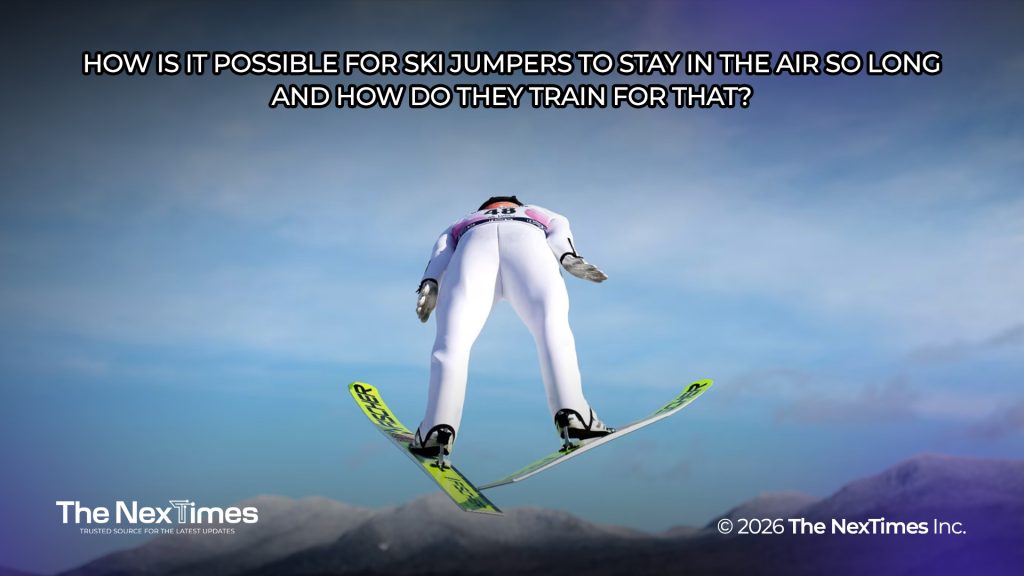
Ski jumping is one of the most thrilling winter sports, leaving spectators amazed at how athletes seem to defy gravity. A common question people ask is: how ski jumpers stay in the air so long and how they train
how is it possible for ski jumpers to stay in the air so long and how do they train for that?
In this guide, we’ll break down the science, technique, and training behind those incredible long-distance flights.
The Science Behind Ski Jumping Flight
Ski jumpers don’t actually “fly” like birds or planes—but they use aerodynamic principles to stay airborne longer. The key forces involved include:
- Lift: Generated by body position and skis
- Gravity: Pulls the jumper downward
- Drag: Air resistance that slows descent
By balancing these forces, jumpers maximize airtime and distance.
How Aerodynamics Helps Ski Jumpers Stay in the Air
The main reason ski jumpers stay airborne so long is aerodynamics. Their skis act like wings, creating lift when angled correctly.
Key aerodynamic factors:
- Wide ski stance (V-style)
- Forward-leaning body posture
- Smooth airflow over the body
This reduces drag and increases lift, allowing longer flights.
The Role of the “V-Style” Technique
Modern ski jumpers use the V-style, where skis are spread apart in a V shape instead of parallel.
Benefits of V-style:
- Increases surface area
- Improves lift
- Enhances stability in the air
This technique revolutionized ski jumping and significantly increased jump distances.
read also: Yoga Technology: Transforming Ancient Practice in the Digital Age beyond yoga
Takeoff: The Most Critical Moment
A successful jump starts with a powerful takeoff.
During takeoff, athletes:
- Push explosively off the ramp
- Maintain perfect timing
- Keep body aligned for airflow
Even a small mistake at this stage can reduce flight time dramatically.
Body Position During Flight
Once airborne, maintaining the right posture is essential.
Ideal flight position:
- Chest close to skis
- Arms held back
- Head low and forward
This minimizes air resistance and maximizes lift.
how ski jumpers stay in the air so long and how they train
Landing Technique and Safety
Landing is just as important as flight.
Ski jumpers use a technique called the Telemark landing, where one foot is placed ahead of the other.
Why it matters:
- Ensures balance
- Reduces injury risk
- Earns higher style points in competitions
How Do Ski Jumpers Train for Long Airtime?
Now let’s address the second part of the question: how do they train for that?
Ski jumpers undergo intense, specialized training programs.
Strength and Conditioning Training
Athletes build explosive power and endurance through:
- Squats and leg presses
- Core strengthening exercises
- Plyometric training (jump drills)
Strong legs are essential for powerful takeoffs.
Balance and Coordination Drills
Since ski jumping requires extreme control, athletes practice:
- Balance board exercises
- Stability drills
- Coordination workouts
These help maintain perfect posture during flight.
Simulation and Dry-Land Training
Jumpers don’t always train on snow.
They also use:
- Plastic-covered ramps (summer training)
- Wind tunnels
- Virtual simulations
These allow year-round practice and technique improvement.
read also: 12 Unique Business Ideas That Actually Work in 2026 (Low Investment, High Profit)
Mental Training and Focus
Ski jumping is as much mental as physical.
Athletes train their minds through:
- Visualization techniques
- Focus exercises
- Pressure management
Confidence plays a huge role in performance.
how ski jumpers stay in the air so long and how they train
how ski jumpers stay in the air so long and how they train
how ski jumpers stay in the air so long and how they train
how ski jumpers stay in the air so long and how they train
how ski jumpers stay in the air so long and how they train
FAQs
1. How is it possible for ski jumpers to stay in the air so long?
Ski jumpers stay in the air due to aerodynamic lift created by their body position and skis, especially using the V-style technique that increases surface area and reduces drag.
2. Do ski jumpers actually fly?
They don’t truly “fly” like airplanes, but they glide through the air using lift and controlled body positioning to extend their airtime.
3. How do ski jumpers train for long jumps?
They train with strength workouts, balance exercises, simulation training, and real jumps on ramps to improve technique and power.
4. What muscles are most important in ski jumping?
Leg muscles (quadriceps, hamstrings), core muscles, and stabilizers are the most important for takeoff power and flight control.
5. Is ski jumping dangerous?
Yes, it can be risky due to high speeds and heights, but proper training, equipment, and techniques help minimize injuries.
6. What is the V-style in ski jumping?
The V-style is a technique where skis are spread in a V shape during flight, increasing lift and allowing longer jumps.
Final Thoughts
So, how is it possible for ski jumpers to stay in the air so long and how do they train for that? It all comes down to a combination of physics, technique, and rigorous training.
From aerodynamic positioning to intense physical and mental preparation, ski jumpers push the limits of what the human body can achieve—making every jump a breathtaking display of skill and science.

Walter serves as the Associate Editor for SEO and Digital Content at Thenextimes.com, where he oversees the planning, optimization, and publication of high-impact articles across technology, business, and trending news. With a strong focus on search performance and audience engagement, he ensures every piece of content is both discoverable and valuable—delivering accurate, timely, and compelling information to readers.
For content submissions or general inquiries, reach out at: editorial@thenextimes.com