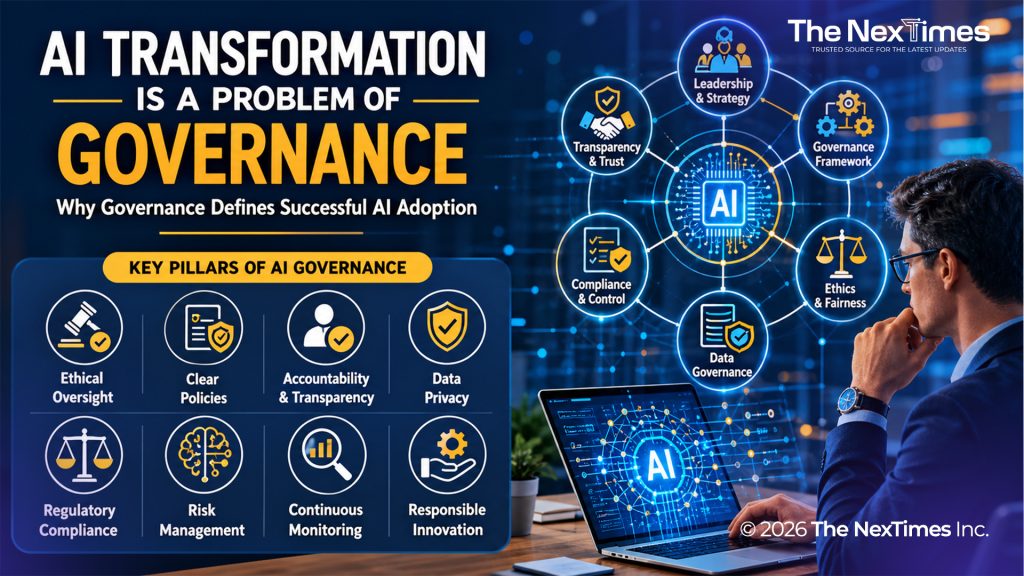
Artificial Intelligence (AI) is rapidly reshaping industries, economies, and societies. While many organizations focus on technological adoption, a deeper issue often goes unnoticed: AI transformation is a problem of governance. This phrase is not just a statement—it reflects a critical challenge that determines whether AI delivers value or creates risk.
In this article, we’ll explore why AI transformation is a problem of governance, how organizations can address it, and what strategies ensure successful implementation.
Understanding AI Transformation
AI transformation refers to integrating AI technologies into business processes, decision-making, and operations. Companies adopt AI to improve efficiency, reduce costs, and gain competitive advantages.
However, the assumption that AI success depends solely on technology is flawed. In reality, AI transformation is a problem of governance, because decision-making structures, policies, and accountability frameworks play a crucial role.
Why Governance Matters in AI
Governance defines how decisions are made, who is responsible, and how risks are managed. Without proper governance, AI systems can become unreliable or even harmful.
This is why experts emphasize that AI transformation is a problem of governance. Organizations must establish clear rules and oversight mechanisms to ensure ethical and effective AI use.
Key Challenges in AI Governance
1. Lack of Clear Accountability
When AI systems make decisions, it’s often unclear who is responsible. This reinforces the idea that AI transformation is a problem of governance.
2. Ethical Concerns
Bias, discrimination, and fairness issues arise when AI is not properly governed.
3. Data Privacy Risks
AI relies heavily on data, and poor governance can lead to breaches or misuse.
4. Regulatory Compliance
Different regions have different laws, making governance more complex.
The Role of Leadership in AI Governance
Leadership plays a central role in ensuring AI success. Executives must understand that AI transformation is a problem of governance, not just IT implementation.
They need to:
- Set clear policies
- Define accountability
- Promote ethical standards
Without leadership involvement, governance frameworks often fail.
Building a Strong AI Governance Framework
To address the reality that AI transformation is a problem of governance, organizations must create structured frameworks.
Key Components:
- Policies and Guidelines: Define how AI should be used
- Risk Management: Identify and mitigate potential risks
- Transparency: Ensure AI decisions are explainable
- Monitoring Systems: Continuously evaluate AI performance
These elements help organizations manage complexity effectively.
Ethical AI and Responsible Innovation
Ethics are at the heart of governance. Since AI transformation is a problem of governance, ethical considerations must guide every stage of AI deployment.
Organizations should:
- Avoid biased datasets
- Ensure fairness in algorithms
- Maintain transparency with users
Responsible innovation builds trust and long-term success.
Data Governance and AI Success
Data is the foundation of AI. Without proper data governance, AI systems cannot function reliably.
This reinforces the idea that AI transformation is a problem of governance, as data quality, security, and accessibility must be carefully managed.
Best practices include:
- Data standardization
- Access control
- Regular audits
read also: Droven IO AI Automation in USA: Tools, Trends & Future Technology
Risk Management in AI Transformation
AI introduces new types of risks, from operational failures to reputational damage.
Because AI transformation is a problem of governance, organizations must proactively manage these risks.
Steps include:
- Conducting impact assessments
- Creating fallback mechanisms
- Establishing compliance checks
The Future of AI Governance
As AI evolves, governance will become even more important. Governments and organizations are developing frameworks to address emerging challenges.
The ongoing evolution confirms that AI transformation is a problem of governance, requiring continuous adaptation and improvement.
Conclusion
AI has the power to transform industries, but success depends on more than technology. The core challenge lies in governance. From ethical considerations to risk management, every aspect of AI requires structured oversight.
Ultimately, AI transformation is a problem of governance because it involves decisions about responsibility, transparency, and accountability. Organizations that recognize this will be better positioned to harness AI’s full potential while minimizing risks.
FAQs
1. Why is AI transformation considered a governance problem?
Because it involves decision-making, accountability, and ethical considerations rather than just technology. This is why AI transformation is a problem of governance.
2. What is AI governance?
AI governance refers to the policies, processes, and controls that ensure AI systems are used responsibly and effectively.
3. How can organizations improve AI governance?
They can implement clear policies, assign accountability, and monitor AI systems regularly.
4. What risks arise without AI governance?
Risks include bias, data breaches, regulatory violations, and lack of accountability.
5. Is AI governance necessary for small businesses?
Yes, regardless of size, every organization must recognize that AI transformation is a problem of governance to ensure safe and effective AI use.

Walter serves as the Associate Editor for SEO and Digital Content at Thenextimes.com, where he oversees the planning, optimization, and publication of high-impact articles across technology, business, and trending news. With a strong focus on search performance and audience engagement, he ensures every piece of content is both discoverable and valuable—delivering accurate, timely, and compelling information to readers.
For content submissions or general inquiries, reach out at: editorial@thenextimes.com