Robotics programming is transforming industries worldwide, from manufacturing and healthcare to space exploration and smart homes. As automation continues to evolve, learning robotic programming has become one of the most valuable technical skills in today’s digital world.
In this guide, you’ll learn what robotics programming is, how it works, the best languages to use, and how to get started.
What is Robotics Programming?
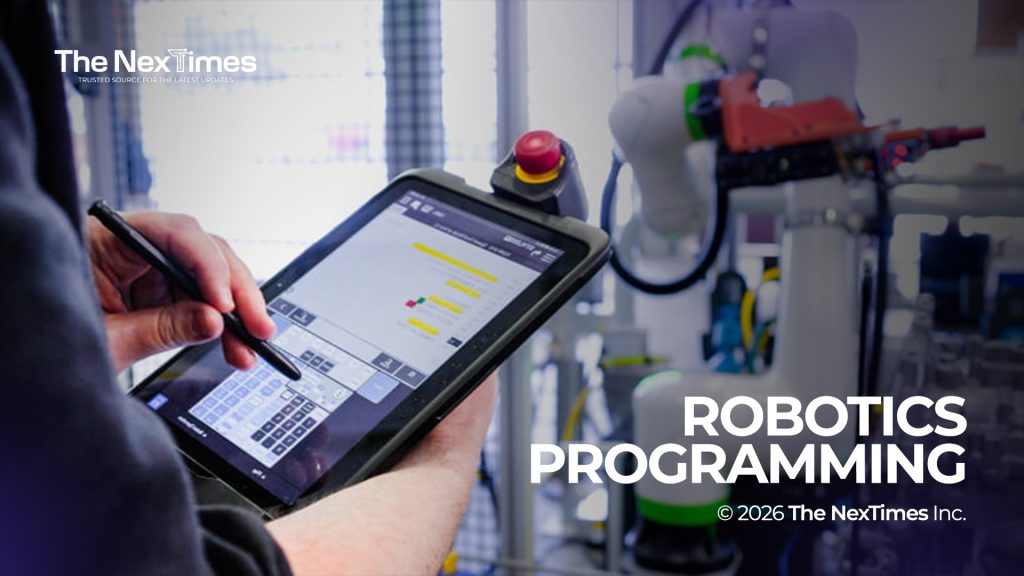
Robotics programming is the process of designing, writing, and testing code that controls robots. These programs allow robots to perform tasks such as movement, object detection, decision-making, and interaction with humans.
It combines software engineering, artificial intelligence, and hardware control to create intelligent systems.
Why Robotics Programming is Important
Robotic programming plays a critical role in automation and innovation. It enables:
- Increased efficiency in industries
- Reduced human error
- Enhanced safety in dangerous environments
- Faster production and scalability
As industries adopt automation, demand for robotics programmers continues to rise.
Key Components of Robotics Programming
To understand robotic programming, you need to know its core components:
- Sensors: Collect data from the environment
- Actuators: Enable physical movement
- Controllers: Process data and execute commands
- Algorithms: Make decisions based on inputs
These elements work together to create a fully functional robotic system.
Popular Programming Languages for Robotics
Choosing the right programming language is essential in robotics programming. Some of the most widely used include:
- Python: Beginner-friendly and widely used in AI and robotics
- C++: High performance and used in real-time systems
- Java: Useful for complex robotic applications
- MATLAB: Ideal for simulations and research
Python is often recommended for beginners due to its simplicity and large community support.
Robotics Programming vs Traditional Programming
While both involve coding, robotic programming is more complex because it interacts with the physical world.
| Feature | Robotic Programming | Traditional Programming |
|---|---|---|
| Environment | Physical + Digital | Mostly Digital |
| Complexity | High | Moderate |
| Real-time Processing | Required | Not always needed |
Robotics requires handling real-time data and hardware integration.
Applications of Robotics Programming
Robotic programming is used across multiple industries:
- Manufacturing: Automated assembly lines
- Healthcare: Surgical robots and diagnostics
- Agriculture: Smart farming and harvesting
- Logistics: Warehouse automation
- Space Exploration: Autonomous rovers
These applications continue to expand as technology advances.
read also Droven IO AI Automation in USA: Tools, Trends & Future Technology
How to Learn Robotics Programming
Getting started with robotics programming is easier than ever. Follow these steps:
- Learn basic programming (Python recommended)
- Understand electronics fundamentals
- Explore robotics platforms like Arduino or Raspberry Pi
- Practice with small projects
- Study AI and machine learning basics
Consistency and hands-on experience are key to mastering robotics programming.
Tools and Frameworks for Robotics Programming
Several tools can help simplify robotics development:
- ROS (Robot Operating System): Industry-standard framework
- Gazebo: Simulation tool
- OpenCV: Computer vision library
- TensorFlow: Machine learning integration
These tools allow developers to build and test robotic systems efficiently.
Challenges in Robotic Programming
Despite its benefits, robotics programming comes with challenges:
- Hardware-software integration complexity
- Real-time processing requirements
- High development costs
- Debugging difficulties
Overcoming these challenges requires strong problem-solving skills and practice.
Future of Robotics Programming
The future of robotics programming looks promising with advancements in:
- Artificial Intelligence
- Machine Learning
- Autonomous Systems
- Human-robot interaction
As technology evolves, robotics programming will become even more accessible and powerful more
FAQs About Robotics Programming
What type of programming is in robotics?
Robotics uses a mix of programming types, including:
- Embedded programming – controls hardware like sensors and motors
- AI & machine learning – helps robots make decisions
- Control systems programming – manages movement and stability
- Computer vision – enables robots to “see” using cameras
- Simulation programming – tests robots in virtual environments
In short, robotics programming combines software + hardware control.
Is C++ needed for robotics?
C++ is not mandatory, but it is very important.
- Used for high-performance and real-time systems
- Common in frameworks like ROS (Robot Operating System)
- Preferred when speed and efficiency matter
👉 Beginners can start with Python, but learning C++ later is a big advantage.
Is robotics coding hard?
Robotics coding can feel difficult at first because it involves:
- Programming + electronics + mechanics
- Real-time problem solving
- Hardware integration
However, it becomes easier if you:
- Start with simple projects
- Learn step by step
- Practice consistently
👉 It’s challenging, but absolutely learnable.
Does NASA use C++ or Python?
NASA uses both C++ and Python, depending on the task:
- C/C++ → critical systems, spacecraft, real-time operations
- Python → data analysis, automation, simulations
👉 Safety-critical systems usually rely on C/C++ because they are faster and more reliable.
Does Elon Musk do programming?
Elon Musk did programming earlier in his career.
- He created a game called Blastar at age 12
- Has experience with languages like C, C++, and Java
- Now focuses more on leadership at companies like SpaceX and Tesla
👉 He still understands code but doesn’t code daily.
How to write “I love you” in coding?
There’s no single way—it depends on the language 😊
Python:
print("I love you")
JavaScript:
console.log("I love you");
C++:
#include <iostream>
using namespace std;int main() {
    cout << "I love you";
    return 0;
}
👉 Coding is just another fun way to express messages!

Walter serves as the Associate Editor for SEO and Digital Content at Thenextimes.com, where he oversees the planning, optimization, and publication of high-impact articles across technology, business, and trending news. With a strong focus on search performance and audience engagement, he ensures every piece of content is both discoverable and valuable—delivering accurate, timely, and compelling information to readers.
For content submissions or general inquiries, reach out at: editorial@thenextimes.com